
- 1404/12/05 تأکید رئیس دانشکده دندانپزشکی بر قانونمداری و نام نیک در آیین تودیع و معارفه رئیس امور اداری دانشکده دانپزشکی
- 1404/12/04 بررسی برنامههای آموزشی و روند اخذ پایاننامه در نشست شورای آموزش دانشکده دندانپزشکی
- 1404/12/03 روزه داری و سلامت: روزه داری و درمان های دندانپزشکی آنچه بیماران باید بدانند
- 1404/12/03 برگزاری آزمون صلاحیت بالینی دندانپزشکی در دانشکده دندانپزشکی دانشگاه علوم پزشکی تهران
- 1404/12/02 آزمون صلاحیت بالینی عملی دانشکده دندانپزشکی دانشگاه علوم پزشکی تهران
- 1404/11/29 روزه داری و سلامت: بهداشت دهان و دندان در ماه مبارک رمضان
- 1404/11/27 سلامت دهان لازمه تحقق «پوشش همگانی سلامت»؛ نشست تخصصی تدوین بسته خدمات پایه در دانشگاه علوم پزشکی تهران
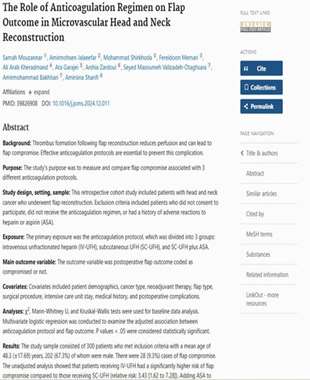
This retrospective cohort study compared three anticoagulation protocols (intravenous unfractionated heparin [IV-UFH], subcutaneous UFH [SC-UFH], and SC-UFH plus aspirin) in patients undergoing head and neck flap reconstruction. The novelty lies in the direct comparison of these regimens within a defined microsurgical population, using multivariate analysis to control for confounding factors. In the unadjusted analysis, IV-UFH was associated with a significantly higher risk of flap compromise compared to SC-UFH, while adding aspirin did not provide a significant protective effect. After adjustment, anticoagulation type was not significantly associated with flap compromise overall; however, subgroup analysis indicated that IV-UFH remained associated with higher odds of flap compromise. Overall, SC-UFH may represent a more practical approach than intravenous administration, although no definitive superiority among protocols was established.
This retrospective cohort study compared three anticoagulation protocols (intravenous unfractionated heparin [IV-UFH], subcutaneous UFH [SC-UFH], and SC-UFH plus aspirin) in patients undergoing head and neck flap reconstruction. The novelty lies in the direct comparison of these regimens within a defined microsurgical population, using multivariate analysis to control for confounding factors.
In the unadjusted analysis, IV-UFH was associated with a significantly higher risk of flap compromise compared to SC-UFH, while adding aspirin did not provide a significant protective effect. After adjustment, anticoagulation type was not significantly associated with flap compromise overall; however, subgroup analysis indicated that IV-UFH remained associated with higher odds of flap compromise.
Overall, SC-UFH may represent a more practical approach than intravenous administration, although no definitive superiority among protocols was established.
نویسنده:
Samah Mouzannar 1, Amirmohsen Jalaeefar 2, Mohammad Shirkhoda 3, Fereidoon Memari 3, Ali Arab Kheradmand 4, Ata Garajei 5, Arshia Zardoui 6, Seyed Masoumeh Valizadeh-Otaghsara 7, Amirmohammad Bakhtiari 7, Amirsina Sharifi 8